Many of my clients are business owners and entrepreneurs, and we often discuss succession planning.
If you don’t have a family member who is the obvious heir apparent, what do you do? I think the question of succession planning isn’t just for entrepreneurs, though.
It’s certainly a topic of discussion in board rooms and at meetings. Yet I don’t often see companies of any size with a real focus and plan in place.
It’s more than simply finding the next president or CEO. It’s more than just finding someone to take over your business or buy you out.
Succession planning should be considered for every key position within your organization.
It’s about how you develop and build managers and leaders. It’s about how you cross-train, develop new skills in your current staff, and build bench strength within departments.
Whether you are a company of 20, 200, or 2000 or more, you cannot build a long-term successful organization if you continually have to replace your people. This is especially true when you have talented leaders who not only have the right mix of technical competencies and interpersonal skills, but know how to build a top-notch team, and bench strength in their area of responsibility.
So what if, as part of your planning process, you included a plan for building new skills in your current staff?
Imagine how much less time you would have to spend interviewing and hiring, training and handling performance problems, and determining how you get the workload covered if a person resigns. Of course, as your company grows you will need to bring on additional talent, and as part of the interview process you should consider what their potential is, both short and long-term.
If you wait to consider succession planning when you are ready to retire, take on a new role or when key people leave your company, it’s already too late.
You recognize you need to think about, and plan for succession planning but have no clue where to start.
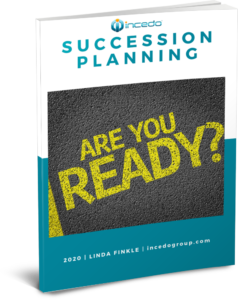
We can help. Download 7 Steps to Successful Succession Planning. Included are the seven steps, a template to show you how to begin, and a worksheet to get you started.